
How Much Do Solar Panels Cost in Scotland in 2026?
July 6, 2026 | 3months | Blog
The short answer
A typical domestic solar panel system in Scotland costs around £6,100 in 2026, based on the Energy Saving Trust's estimate for an average 3.5kWp system.
The actual price can vary considerably depending on the size of the installation, the type of roof, access requirements and whether battery storage is included.
For a homeowner looking at solar panels and a 5kWh battery, the combined cost will usually be higher. The Energy Saving Trust currently estimates that a typical 5kWh battery costs around £4,600, although battery prices can range from approximately £1,500 to £10,000 depending on the make and capacity.
The only reliable way to understand what solar will cost for your home is to receive a proposal based on your roof, electricity use and future plans.
What does the average price include?
A complete solar installation involves considerably more than simply buying panels and attaching them to a roof.
A professional quote will normally include:
- The solar panels
- The inverter
- The roof mounting system
- Electrical equipment, wiring and isolators
- Scaffolding or access equipment
- Installation and commissioning
- System design and performance estimates
- Registration and certification
- An app or online monitoring platform
The exact equipment will differ between systems. A straightforward installation on an accessible tiled roof will usually cost less than a project involving multiple roofs, slate, an integrated in-roof system or substantial electrical upgrades.
What affects the cost of solar panels in Scotland?
The size of your system
The more panels you install, the more the system will generally cost.
However, the cheapest system is not automatically the best-value system. Installing too few panels may limit your potential savings, particularly if you expect your electricity use to rise.
This could be important if you are planning to:
- Buy an electric vehicle
- Install a home charger
- Move to electric heating
- Add a heat pump
- Work from home more frequently
Households with high-demand equipment, including EV chargers, may save more because they can use a greater proportion of the electricity generated by their panels.
Your roof type
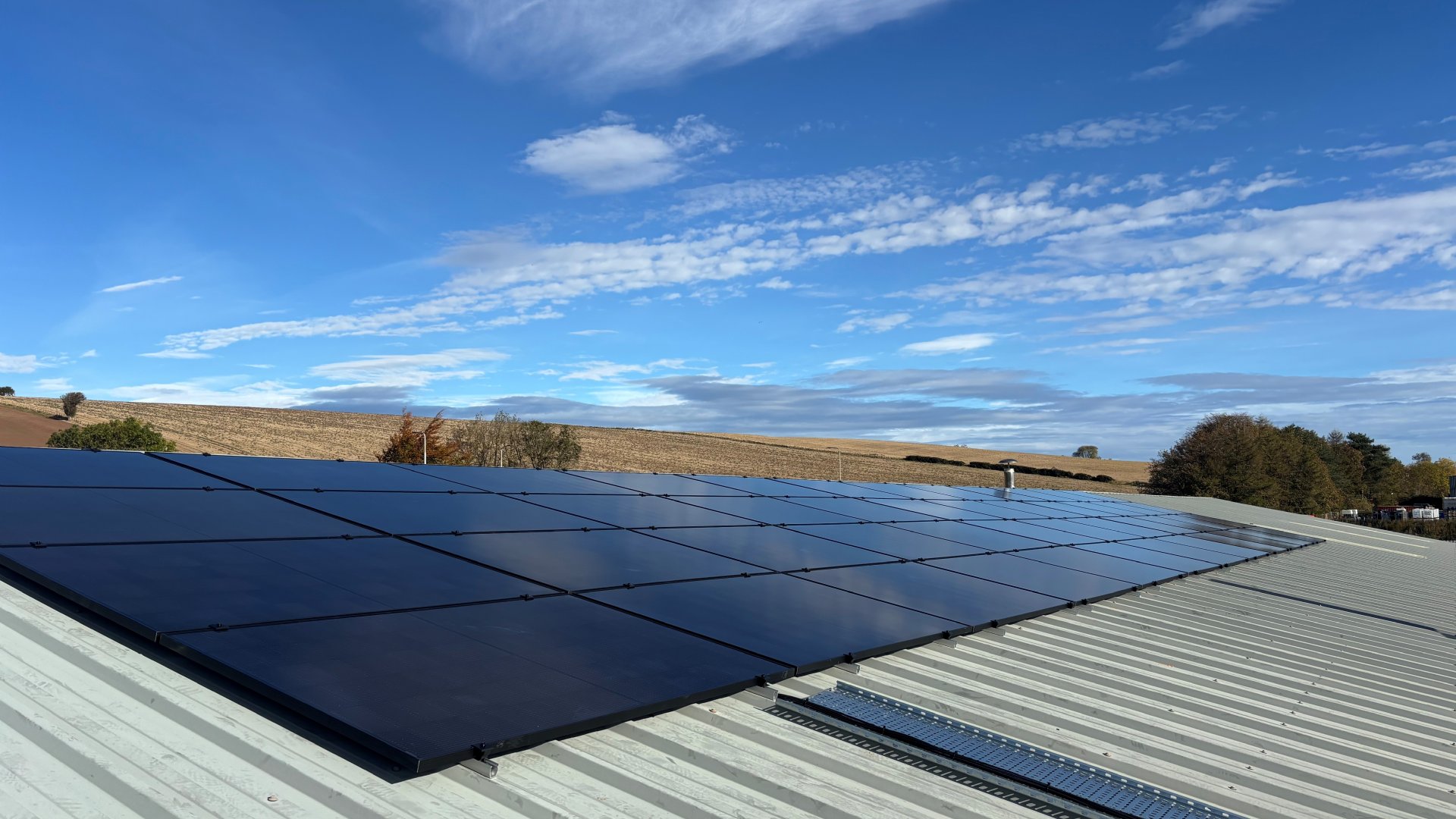
Eco Vision Energy has installed solar panels on tiled, slate, metal, cement-fibre and flat roofs across Scotland.
Each requires a different approach.
A standard tiled roof can often use hooks and mounting rails. A flat roof may require a carefully calculated ballasted system, while a standing-seam metal roof can use specialist clamps that avoid penetrating the roof surface.
Integrated in-roof systems also tend to involve more work than conventional panels mounted above the tiles. They provide a lower-profile finish and can be particularly attractive on new-build properties, but the installation is more involved.
Access and scaffolding
Scaffolding is an important part of many rooftop installations. The height and shape of the building, access around the property and proximity to roads or pavements can all influence the cost.
On one of our commercial projects at Grange Business Centre in Stevenston, the location beside a busy road and pavement meant scaffolding, edge protection and council permits all had to be carefully organised.
A detailed quote should make these requirements clear from the beginning rather than introducing unexpected charges later.
The condition of your roof
Your roof needs to be suitable for the system and expected to remain in good condition for many years.
If repairs or replacement coverings are likely to be required soon, it can make sense to complete that work before installing the panels. Costs can sometimes be reduced when scaffolding is already in place for roof repairs or as part of a new-build project.
Battery storage
Battery storage increases the initial cost, but it can allow you to use more of the electricity generated by your panels.
Instead of exporting unused solar electricity immediately, the battery can store it for use later in the day. Some customers also charge their batteries overnight on cheaper time-of-use tariffs, then use that electricity during more expensive periods.
A typical 5kWh battery system costs around £4,600, although the final price depends on capacity, specification and how it is integrated with the solar system. Installing the panels and battery together may reduce overall installation costs because the engineers are already onsite.
Electrical upgrades
Not every property is ready for solar without additional electrical work.
Large homes, farms and commercial properties may need new distribution boards, upgraded cabling, export management equipment or changes to the existing supply.
For most ordinary domestic systems, the work is considerably simpler. However, the installer still needs to inspect the property and design the system safely around the existing electrical infrastructure.
Is there VAT on solar panels in Scotland?
Qualifying solar panel installations in residential properties currently benefit from 0% VAT until 31 March 2027.
The relief also covers qualifying electrical battery installations, including standalone home batteries.
This applies to residential installations. Commercial solar projects are treated differently for VAT and should be assessed according to the individual business and project.
Can you get funding for solar panels in Scotland?
Funding is more complicated than many online adverts suggest.
There is no universal grant that provides free solar panels to every Scottish homeowner.
However, some households may qualify for support through Scottish Government-backed energy-efficiency programmes, depending on their circumstances and the measures being installed.
Home Energy Scotland provides information about available grants, interest-free loans and support schemes. Funding can change, is subject to eligibility and may be allocated on a first-come, first-served basis.
It is always worth checking the latest position before agreeing to an installation, but customers should be cautious of adverts promising "free solar" without clearly explaining the eligibility conditions or contractual arrangements.
Why can two similar houses receive different quotes?
Even neighbouring houses can require different solar systems.
We saw this during a project in Hunters Quay, Dunoon, where two adjoining properties both chose solar. Each received 14 panels, but one homeowner added a Duracell battery while the other selected a hybrid inverter that would make it easier to install a battery later.
Other differences can include:
- Roof direction and pitch
- Shading from trees or chimneys
- Available roof space
- Household electricity use
- Battery requirements
- EV charging plans
- The condition of the existing electrics
That is why a good proposal should be designed around the individual customer rather than based on a fixed online package.
Does a more expensive solar system provide better value?
Sometimes, but not automatically.
A larger system may provide better long-term value if the customer can use the additional electricity. A battery could also improve energy independence, but it will not be the right financial choice for every household.
The focus should be on achieving the right balance between:
- Installation cost
- Expected generation
- Electricity used onsite
- Export payments
- Future energy use
- Product quality and warranties
Buying the cheapest available system can be a false economy if it is poorly designed, uses unsuitable equipment or offers little support after installation.
What should be included in a solar proposal?
A professional solar proposal should clearly explain:
- The proposed system size
- The number and type of panels
- The inverter and battery, where applicable
- Expected annual electricity generation
- Estimated bill savings
- Potential export income
- Carbon savings
- The mounting system
- The total installed cost
- Product and workmanship warranties
- Any assumptions used in the calculations
Performance forecasts are estimates rather than guarantees. Electricity generation will vary with the weather, shading and how the system is used, but the customer should still be given a clear and realistic projection.
What we have learned from installing solar across Scotland
There is no single "standard Scottish solar installation".
Eco Vision Energy has completed domestic systems in locations including Dunoon, Arran, Peterhead, Kilmun and Hunters Quay, alongside commercial installations for builders' merchants, farms, garden centres, vehicle businesses and agricultural depots across Scotland.
We have installed panels:
- Across several roof orientations
- On pitched and flat roofs
- On farms using ground-mounted systems
- On new builds using integrated panels
- Alongside battery storage and EV charging
- Across multiple buildings on large commercial sites
The biggest lesson is that the design matters more than any headline package price.
A carefully designed system that reflects the property and the customer's electricity use will almost always offer better value than a generic system chosen purely because it appears cheap.
So, how much should you budget?
For an average domestic system, around £6,100 is a useful starting point, but it should not be treated as a guaranteed price for every Scottish home.
You may pay more if you want:
- A larger solar array
- Battery storage
- An in-roof installation
- Panels across several roof sections
- Additional electrical work
- Specialist scaffolding or mounting equipment
The important figure is not simply the upfront cost. It is the relationship between that cost, the electricity the system is expected to generate and the savings it could deliver over its working life.
Get a tailored solar quote
Every Eco Vision Energy project begins with a free, no-obligation consultation.
We will assess your property, current electricity use and future plans before preparing a bespoke proposal showing the recommended system, expected performance and estimated savings.
?? 0800 099 6110
?? info@eco-vision.co.uk