
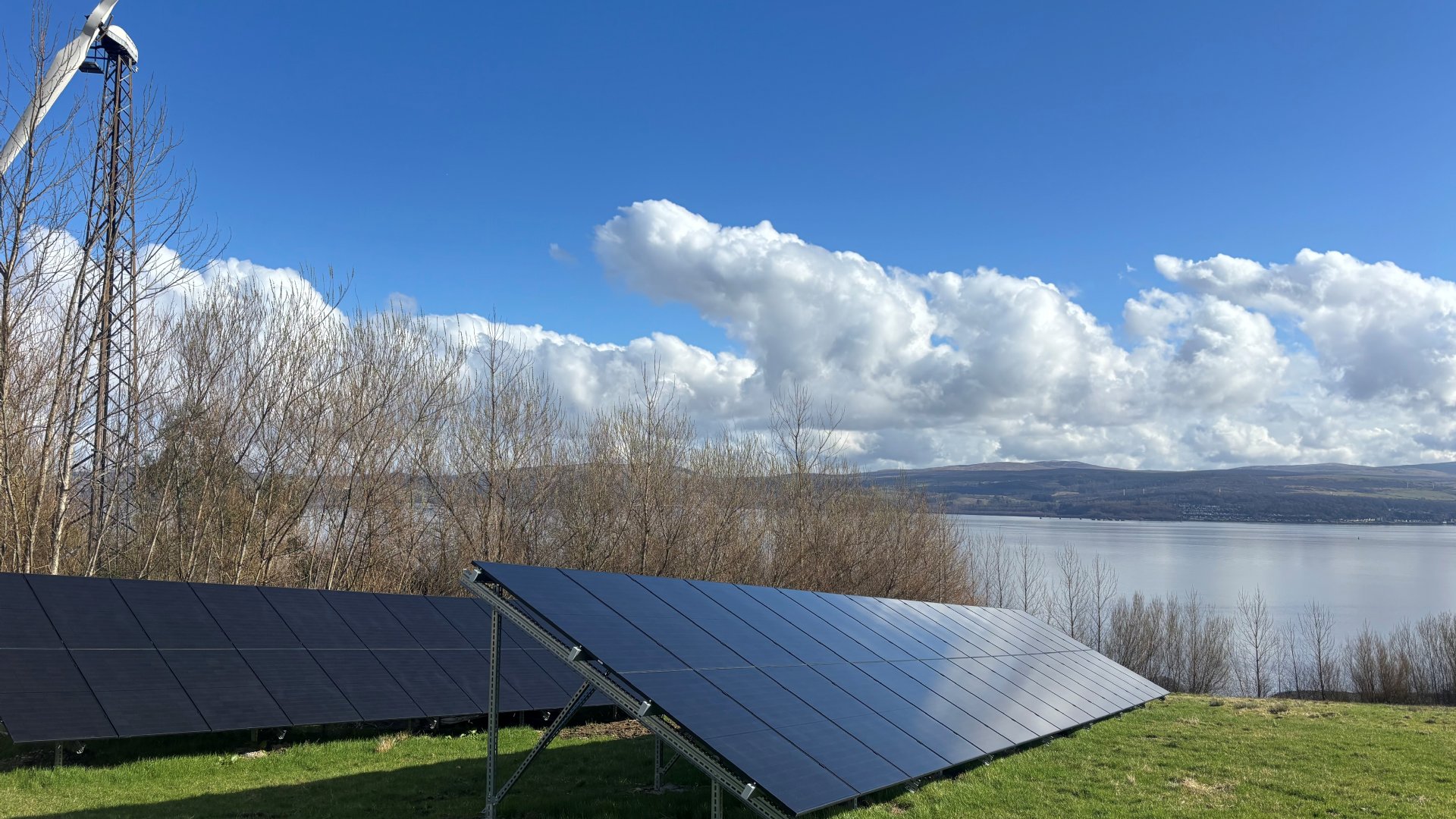
How long do solar panels take to pay for themselves in Scotland?
September 23, 2026 | 15d | Blog
How Long Do Solar Panels Take to Pay for Themselves in Scotland?
For a typical home in Scotland, solar panels can currently take around 11 to 12 years to pay for themselves. Energy Saving Trust's latest figures use Stirling as the Scottish example and estimate a payback period of 11 years for households that are home all day or half the day, and around 12 years for households that are out all day.
Those figures include payments for surplus electricity exported back to the grid and are based on energy prices from July 2026.
But there is no single payback period that applies to every home.
The cost of your system, the amount of electricity your panels generate, how much of that electricity you use yourself, your export tariff, your roof and even your daily routine can all affect how quickly solar pays back its installation cost.
So, if you are considering solar panels in Scotland, what should you realistically expect?
What is the average solar panel payback period in Scotland?
Energy Saving Trust currently gives the following estimated payback periods for a home in Stirling:
| Household routine | Estimated solar payback period in Stirling |
|---|---|
| Home all day | Around 11 years |
| Home half the day | Around 11 years |
| Out all day | Around 12 years |
These estimates include export payments and provide a useful benchmark for homeowners across central Scotland.
Your own result could be shorter or longer. A well-positioned system on an unshaded roof, combined with good electricity usage habits and a competitive export tariff, may perform better than the benchmark. A shaded roof, higher installation cost or low solar generation could extend the payback period.
What does it mean when solar panels have "paid for themselves"?
The solar panel payback period is the point at which the financial benefit generated by your system has broadly matched what you originally paid to install it.
That benefit can come from two places:
- Electricity you do not need to buy from the grid because you generate and use your own solar electricity.
- Payments for electricity you export through an eligible export tariff such as the Smart Export Guarantee.
For example, if a solar installation cost £7,500 and it produced a combined average benefit of £650 per year through electricity savings and export payments, a simple payback calculation would be:
£7,500 ÷ £650 = approximately 11.5 years.
This is only an illustrative example. Your actual installation cost, generation and annual savings will depend on your property and electricity use.
How much do solar panels cost in Scotland?
Energy Saving Trust currently estimates that an average domestic solar panel system is around 4.5kWp and costs approximately £7,600 to install.
However, solar installations are not one-size-fits-all.
The final cost can depend on:
- the number and type of solar panels;
- the size of the system;
- roof access and scaffolding requirements;
- the type and condition of your roof;
- the inverter and other equipment used;
- whether optimisers are required;
- whether battery storage is included; and
- any electrical work required as part of the installation.
At present, qualifying professionally installed solar panels on homes in Great Britain are also subject to 0% VAT until 31 March 2027 under the current energy-saving materials VAT relief.
What affects how quickly solar panels pay for themselves?
Two neighbouring homes can install similar solar systems and still achieve different payback periods.
Here are some of the biggest factors.
1. How much electricity your solar panels generate
The more electricity your system generates, the more opportunity you have to reduce grid electricity use or earn export payments.
Generation is affected by:
- system size;
- roof direction;
- roof pitch;
- shading from trees, chimneys or nearby buildings;
- your location; and
- the performance of the panels and inverter.
A south-facing, unshaded roof will usually offer the strongest generation. East and west-facing roofs can still be very suitable for solar, although their total annual generation may be lower than an equivalent south-facing system.
2. How much solar electricity you use yourself
Using your own solar electricity is particularly valuable because it replaces electricity you would otherwise have bought from your supplier.
If your panels are generating electricity while your washing machine, dishwasher, home office equipment or other appliances are running, more of that energy can be used directly in the home.
Changing when you use certain appliances can therefore improve the financial return from your system.
For example, setting a washing machine or dishwasher to run during daylight hours can help increase your solar self-consumption.
3. Your Smart Export Guarantee tariff
You will not always be able to use every unit of electricity your panels generate.
Surplus electricity can be exported to the grid, and eligible households can receive payments through the Smart Export Guarantee or another qualifying export tariff.
Export rates vary between suppliers, so choosing a competitive tariff can make a meaningful difference to the overall financial return from solar.
Export payments are not automatic. You normally need to apply to an eligible supplier and meet the tariff's requirements.
4. Future electricity prices
The value of the electricity generated by your solar panels is partly linked to what you would otherwise pay to buy electricity from the grid.
If electricity prices rise, each unit of solar electricity you use yourself becomes more valuable compared with buying that unit from your supplier.
If electricity prices fall, the opposite is true.
This is one reason solar payback periods are estimates rather than guarantees: nobody can know exactly what household electricity prices will be over the next 10, 15 or 20 years.
5. The price you pay for your solar installation
A lower upfront cost generally means a shorter payback period, assuming system performance is comparable.
However, choosing solar purely on the cheapest quote can be a false economy.
Panel quality, inverter quality, system design, warranties, workmanship and the experience of the installer all matter when you are buying a system designed to operate for decades.
Do solar panels take longer to pay for themselves in Scotland?
Scotland receives less annual solar radiation than southern parts of England, so an identical system will generally generate less electricity in Scotland than it would in the south of the UK.
That does not mean solar panels are ineffective in Scotland.
Solar panels generate electricity from daylight, not heat, and continue to produce power on cloudy days.
Energy Saving Trust's current comparison puts Stirling at an estimated 11 to 12-year payback period, compared with around nine years in London.
That is a difference, but it still leaves substantial operating life after the system reaches its estimated break-even point.
How long do solar panels last?
Modern solar panels should typically last for at least 25 years, and many continue generating electricity beyond that point.
If a system pays for itself in around 11 to 12 years, that could leave well over a decade of further electricity generation beyond the estimated payback point.
Solar panels do gradually lose some performance over time, and other components of the system may need attention sooner.
For example, Energy Saving Trust advises that a solar inverter may need to be replaced after around 12 years.
Maintenance and replacement costs should therefore be considered when assessing the long-term return from any solar installation.
Will adding a battery make solar pay for itself faster?
Not necessarily.
A solar battery lets you store electricity generated during the day and use it later, rather than exporting it immediately to the grid.
That can reduce how much electricity you need to buy in the evening and can increase your energy independence.
However, a battery also adds to the upfront cost of the system.
Energy Saving Trust currently estimates that a typical 5kWh battery costs around £4,600 and has a lifespan of roughly 10 to 12 years. Its research also notes that battery savings do not always recover the cost of the battery within its expected lifetime, particularly where a household already has access to a good export tariff.
That does not mean battery storage is a bad investment.
For households with higher electricity demand, electric vehicles, heat pumps, time-of-use tariffs or a strong desire to reduce grid dependence, battery storage can be extremely useful.
The important thing is to assess the battery and solar panels as part of your home's wider energy usage rather than assuming a battery will automatically shorten the payback period.
Can an electric vehicle or heat pump improve the value of solar?
Potentially, yes.
Homes with higher electricity consumption often have more opportunities to use the electricity generated by their solar panels themselves.
If you have an electric vehicle that can be charged during the day, for example, some of that charging energy can come directly from your solar panels.
The same principle applies to electrically powered technologies such as heat pumps.
Using more of your own generation instead of exporting it can increase the value you receive from each unit of solar electricity.
That is why the best solar design should consider not only how much electricity you use today, but how your household's energy needs could change in the future.
How can I make my solar panels pay back faster?
There are several ways to improve the financial performance of a solar installation:
- Choose the right system size. Your system should be designed around your roof and electricity requirements.
- Use more electricity during daylight hours. Run suitable appliances while your panels are generating.
- Compare export tariffs. The amount suppliers pay for exported electricity can vary considerably.
- Minimise shading. Good system design can help maximise generation from the available roof space.
- Consider future electricity demand. EV charging, heat pumps and other electrical loads can change how much solar electricity you can use.
- Monitor your system. Keeping an eye on generation can help identify faults and make sure your panels are performing as expected.
Are solar panels worth it in Scotland?
For many suitable Scottish homes, solar panels can provide electricity savings for considerably longer than their estimated payback period.
The current Energy Saving Trust benchmark of around 11 to 12 years in Stirling should be viewed against a panel lifespan of at least 25 years.
There are also benefits beyond simple payback.
Solar can:
- reduce the amount of electricity you buy from the grid;
- reduce your exposure to future electricity price rises;
- allow you to earn money from surplus generation;
- work alongside battery storage, EV chargers and heat pumps; and
- generate low-carbon electricity from your own property.
The important thing is to get a realistic forecast based on your own home rather than relying on national averages.
How do we calculate solar payback at Eco Vision Energy?
When we assess a property for solar, we look at the factors that actually affect its potential performance.
That includes your roof, orientation, shading, available installation area, current electricity use and how your household uses energy throughout the day.
We can then recommend a system designed around your property and give you a clearer picture of its expected generation, potential electricity savings and estimated payback.
If you want to know how long solar panels could take to pay for themselves on your home in Scotland, speak to Eco Vision Energy for a free solar quote and personalised system assessment.
Frequently Asked Questions
How long do solar panels take to pay for themselves in Scotland?
Energy Saving Trust's current figures estimate a payback period of around 11 to 12 years for a typical solar panel installation in Stirling, including export payments. Your own payback period may be shorter or longer depending on installation cost, generation, electricity use and export tariff.
What is the average cost of solar panels in Scotland?
Energy Saving Trust currently estimates that an average 4.5kWp domestic solar system costs around £7,600. Actual prices vary depending on system size, equipment, roof access, installation requirements and whether additional technology such as battery storage is included.
Do solar panels work well in Scotland?
Yes. Solar panels generate electricity from daylight rather than heat, so they continue to work in Scotland and on cloudy days. Scottish systems generally generate less annual electricity than identical systems in the south of England, but solar can still provide substantial long-term electricity savings.
How long do solar panels last in Scotland?
Solar panels should typically last at least 25 years. Their output gradually reduces over time, while components such as the inverter may need replacement sooner. Energy Saving Trust advises that an inverter may need replacing after around 12 years.
Can I get paid for excess solar electricity in Scotland?
Yes. Eligible solar panel owners in Scotland can receive payments for electricity exported to the grid through the Smart Export Guarantee or other qualifying export tariffs. Rates and terms vary between electricity suppliers.
Does being at home during the day make solar pay back faster?
It can help because you have more opportunity to use solar electricity as it is generated. However, export payments mean unused electricity can still have value, and Energy Saving Trust's current Stirling figures show only a relatively small difference in estimated payback between households that are home during the day and those that are out.
Does a solar battery reduce the payback period?
Not automatically. A battery can increase the amount of solar electricity you use yourself and reduce grid imports, but it also increases the upfront cost of the system. Whether it improves the overall financial return depends on your electricity use, tariff, battery size and other factors.
Are solar panels worth installing if they take 11 or 12 years to pay back?
A typical solar panel system can operate for 25 years or more, so an estimated 11 to 12-year payback can still leave many years of electricity generation after the initial installation cost has broadly been recovered. The exact financial return depends on future energy prices, system performance, export payments and maintenance costs.
Can I make my solar panels pay for themselves more quickly?
You may be able to improve the return by maximising solar generation, using more electricity during daylight hours, choosing a competitive export tariff, monitoring system performance and ensuring the installation is appropriately sized for your home and future electricity needs.